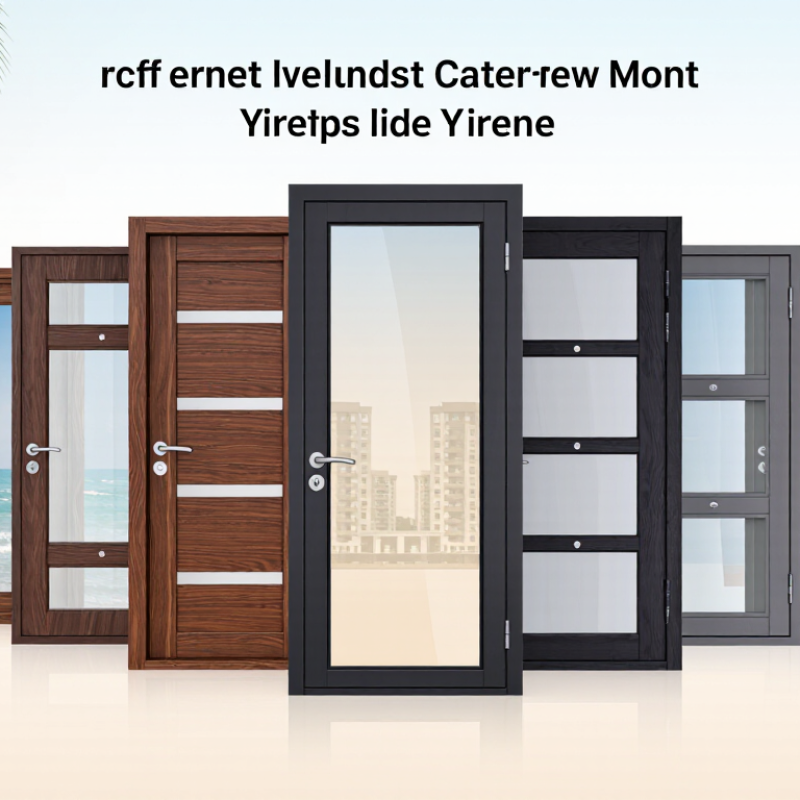
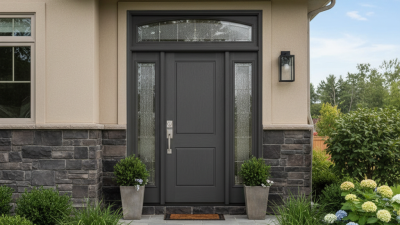
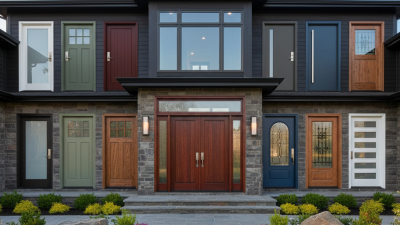
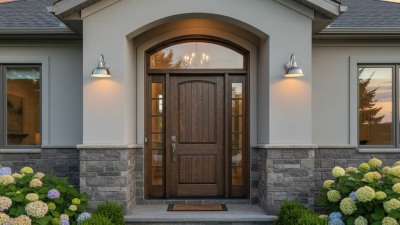
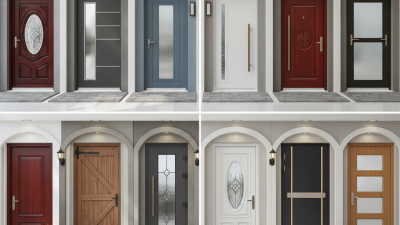
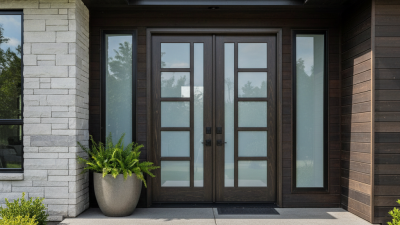
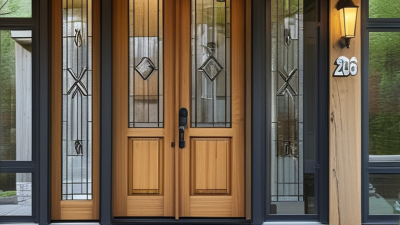
The 2026 Best Fiberglass Doors for Global Buyers guide examines performance beyond attractive showroom photography. Fiberglass doors now serve coastal homes, urban apartments, commercial entrances, and energy-conscious renovations. Buyers need evidence, not impressive adjectives. We compare insulation values, weather resistance, security hardware compatibility, finish durability, warranty coverage, and replacement support. These details matter when a door crosses oceans before reaching a job site.
John McFeely, a veteran door-industry consultant and former technical leader at Therma-Tru, has said, “A door must perform as part of a complete opening system.” That principle guides this review. A strong slab cannot correct poor installation, an unsuitable frame, or weak flashing. We therefore consider the whole assembly, including hinges, thresholds, seals, glazing, and local fitting skills. Real experience also exposes inconvenient differences. A dark finish may demand more maintenance in intense sunlight. A premium woodgrain texture may look excellent, yet matching replacement components can be difficult in smaller markets.
No ranking is perfect. Climate, shipping conditions, building standards, and budget change the result. Some doors perform beautifully in cold regions but need careful sealing near tropical coastlines. Others offer excellent value but limited customization. We identify those compromises clearly, so global buyers can compare practical ownership rather than catalogue promises. The best fiberglass doors should feel solid, close quietly, resist moisture, and remain stable after years of seasonal movement. Still, installation quality can decide the outcome. That part deserves more attention than it usually receives.
Fiberglass doors are available in smooth, wood-grain, flush, and decorative panel designs. Each type can use different core materials and panel thicknesses. The surface affects appearance and maintenance, but the core strongly influences insulation. R-value measures resistance to heat flow. Higher values usually indicate better thermal insulation.
Polyurethane foam often provides a higher R-value than basic polystyrene at similar thicknesses. Polystyrene cores can still offer dependable stability and cost control. Some heavy-duty designs use reinforced rails, stiles, or composite frames for improved strength.
Fiberglass skins resist moisture, dents, and repeated temperature changes better than many traditional materials. They do not rust.
Performance depends on more than the door slab. A poorly fitted frame can waste the insulation value of an excellent core. Weatherstripping, threshold adjustment, glazing, and correct installation deserve equal attention. For international projects, compare R-value with U-factor because different regions use different standards. Check tested values, not only marketing estimates. A higher number is not the whole story.
In humid coastal areas, sealed edges and corrosion-resistant hardware matter. In cold regions, a thick insulated core and tight perimeter seal are more important.
I have seen specifications appear impressive while installation details remained unclear. That is a weakness worth questioning. Real durability also depends on sunlight, impact exposure, maintenance, and local service conditions. Door selection should match the building, not just the catalog.
For global buyers, thermal performance begins with the NFRC U-factor. It measures how quickly heat passes through the complete door assembly. A lower U-factor generally indicates better insulation. Check the certified rating for the door, frame, glazing, and edge details, not only the fiberglass skin.
R-value describes resistance to heat flow, and higher values usually suggest stronger insulation. However, R-value alone can mislead buyers. It may describe the insulated core rather than the entire installed door. A carefully sealed frame can matter as much as the core. Small gaps around the threshold can feel like cold air near your ankles.
ENERGY STAR eligibility depends on current regional requirements, product type, glazing, and climate zone. Buyers should confirm the latest criteria for the destination market before ordering. NFRC labels offer a useful comparison because they use standardized testing.
Still, laboratory results cannot fully predict poor installation, repeated door movement, or humid coastal conditions. A lower U-factor is valuable, but it is not the whole story.
I would also examine air leakage, solar heat gain, weatherstripping, and certified installation instructions.
This step is often skipped. That weakness deserves attention. A reliable specification sheet should show testing details, rating units, applicable climate assumptions, and the date of certification.
Thermal performance is a system result, not a single number.
Fiberglass doors perform well in demanding climates, but their test results need careful reading. ASTM E283 measures air leakage through a complete door assembly under a controlled pressure difference. Lower leakage means fewer drafts around the panel, frame, and seals. The U.S. Department of Energy reports that air leakage can represent 25–40% of household heating and cooling energy use. This figure covers entire homes, not doors alone. Still, it shows why tight installation matters.
Water testing is equally practical. AAMA 501.1 uses dynamic pressure and controlled water spray to challenge the assembly. The AAMA/WDMA/CSA 101/I.S.2/A440 standard also defines performance classes and water-penetration requirements for fenestration products. Buyers should request the tested pressure, leakage rate, specimen size, and installation details. A door passing in a laboratory may still leak on site. Poor sill drainage, uneven masonry, or compressed gaskets can change the result. That is the uncomfortable part.
Tips: Ask for ASTM E283 results in cfm/ft², not “weatherproof” claims. Confirm whether water testing used static or dynamic pressure. Inspect the sill pan, corner seals, and weep paths before installation. In coastal or monsoon regions, choose a test pressure matching local exposure, not merely the minimum listing. Recheck seals after the first heavy storm; small gaps often appear where drawings looked perfect.
Global buyers need more than a fiberglass door that looks strong. Compliance begins with the project’s location, building type, and approval process. Fire-rated assemblies must be tested as complete systems, including the slab, frame, hinges, glazing, seals, and hardware. A fire label on the door alone may not be enough. Check the required rating, such as 20, 45, or 90 minutes, with the local authority before ordering.
Security performance also depends on the full assembly. Look for tested resistance to forced entry, reliable multi-point locking, reinforced strike areas, and laminated or certified safety glazing where required. Hardware should match the door’s tested configuration. Changing a lock or drilling the frame can weaken compliance. This detail is often missed during installation. It should not be.
Climate-zone codes create different demands. Coastal projects may require corrosion-resistant hardware and impact protection. Cold regions need low air leakage, insulated cores, and careful threshold sealing. Hot, humid areas require stable finishes, moisture-resistant components, and drainage around the opening. Field measurements matter. A small gap near the sill can invite water, insects, and heat loss. We have seen specifications look correct on paper but fail after poor installation. That is an uncomfortable lesson. Ask for test reports, product traceability, installation instructions, and documents accepted by the destination market. Requirements change, and assumptions age quickly.
| Application or Market | Fire-Rating Requirement | Security and Hardware Standards | Weather, Impact, and Durability Criteria | Climate-Zone and Energy-Code Considerations | Recommended Buyer Verification |
|---|---|---|---|---|---|
| United States Residential exterior entry |
No automatic fire rating A fire-rated assembly is required only where specified by the adopted building code, wall assembly, or project design. |
Use door hardware tested to the applicable ANSI/BHMA standard. For residential egress, verify that the lock and latch arrangement complies with the adopted International Residential Code. | For severe weather regions, verify a complete door assembly tested for air, water, structural, and forced-entry performance. Coastal openings may require ASTM E1886 and ASTM E1996 testing. | The 2021 IECC uses U.S. climate zones 1–8. Confirm the local fenestration U-factor, solar heat gain coefficient, air-leakage, and insulation requirements with the project jurisdiction. | Request the complete assembly report, U-factor and SHGC values, air-leakage result, water-resistance result, installation instructions, and evidence of code acceptance. |
| United States Apartment, hotel, or multi-family corridor |
Common ratings: 20, 45, 60, or 90 minutes The required rating depends on the fire-resistance rating of the separating wall or corridor enclosure. The door, frame, hinges, closer, latch, and glazing must be listed as an assembly. |
Verify self-closing and self-latching functions where required. Hardware should be compatible with the listed fire-door assembly and the applicable egress provisions. | Confirm smoke-control requirements when the adopted code requires a labeled smoke-and-draft-control assembly. Door perimeter seals must be compatible with the listing. | Exterior units must also meet the applicable IECC or local energy-code requirements. Interior fire doors are generally not evaluated by exterior weather-performance criteria. | Request a third-party fire-door listing identifying the permitted door thickness, core, frame, glazing, hardware, maximum size, and installation limitations. |
| United States High-wind and hurricane coastal zones |
Project-specific Fire rating may be required by occupancy separation or property design, but it does not replace wind and impact certification. |
Verify multi-point or single-point locking hardware according to the tested assembly. Forced-entry performance should be documented where required by the local product-approval system. | Common test references include ASTM E1886 and ASTM E1996 for windborne-debris impact and cyclic pressure. Florida projects may additionally require Florida Building Code product approval or local approval. | Verify the design wind pressure, exposure category, wind-borne-debris region, and required product approval before selecting the door. | Obtain the product approval number or evaluation report, design-pressure rating, impact classification, approved sizes, anchorage details, and replacement-part limitations. |
| Canada Cold and mixed-humid regions |
Project-specific Fire-protection ratings depend on the National Building Code of Canada and the provincial or territorial adoption in force at the project location. |
Confirm lock, latch, closer, and egress hardware requirements under the applicable Canadian code and project specification. Hardware must not invalidate a fire-door listing. | Verify air, water, structural, and thermal performance under the applicable Canadian fenestration and door requirements. Pay particular attention to condensation resistance and low-temperature operation. | Canadian energy requirements vary by code edition and province. Confirm thermal transmittance, air leakage, and installation details for the local heating degree-day conditions. | Request Canadian test reports or certification records, thermal data, air-leakage data, installation details, and evidence that the assembly is accepted in the target province. |
| European Union and United Kingdom Exterior entrance doors |
EI₂ 30, EI₂ 60, or other project rating Where fire resistance is required, verify classification under EN 13501-2 based on testing to EN 1634-1. The rating applies to the complete door set, not only the leaf. |
For security, review resistance-to-burglary classification under EN 1627. Classes RC2 and RC3 are commonly specified for different risk levels, but the required class is project-specific. | Verify weather performance under EN 14351-1, including air permeability, watertightness, wind resistance, thermal transmittance, and acoustic performance where required. | Confirm the national implementation of energy requirements, the declared U-value, threshold details, thermal bridging, and the installation zone. UK projects may follow separate post-Brexit regulatory routes. | Request the Declaration of Performance where applicable, CE or UKCA route documentation, EN test reports, classification reports, hardware schedule, and installation instructions. |
| Australia and New Zealand Residential and commercial exterior doors |
FRL or fire-door rating when required Fire doors must be tested and installed as complete assemblies under the applicable national and local requirements. |
Verify hardware, egress, and accessibility requirements under the applicable NCC provisions and referenced Australian or New Zealand standards. | For external doors, confirm water penetration, structural adequacy, air infiltration, and exposure category. Coastal and high-wind areas require project-specific wind design. | Confirm the applicable NCC climate zone, thermal performance, condensation risk, and orientation-related solar requirements. Australia uses climate zones 1–8. | Request evidence of testing to the applicable AS/NZS standards, the complete assembly configuration, climate-zone thermal data, and installation and maintenance requirements. |
| Tropical and humid climates Coastal Asia, Africa, Latin America, and island markets |
Local-code or project-specific Do not assume that a non-combustible-looking or insulated fiberglass leaf is fire-rated. Confirm the tested assembly and local authority acceptance. |
Specify corrosion-resistant hinges, fasteners, threshold components, and compatible locking hardware. Coastal salt exposure may require enhanced corrosion protection. | Prioritize resistance to moisture absorption, ultraviolet exposure, fungal growth, swelling, delamination, and repeated wet-dry cycles. Verify drainage and threshold design. | Evaluate solar heat gain, ventilation strategy, condensation, high humidity, driving rain, and local cyclone or typhoon wind requirements. No single global climate-zone code applies to all countries. | Request accelerated weathering data, water-penetration testing, corrosion information, operating-temperature limits, maintenance instructions, and local structural calculations. |
| Cold and subarctic climates North America, Northern Europe, and similar regions |
Project-specific Fire rating is determined by occupancy, separation, and the adopted building code rather than by climate alone. |
Verify lock and latch operation at low temperatures, compatibility with weather seals, and resistance to ice formation around the threshold. | Select a thermally stable door slab and frame system with a durable weather seal, insulated threshold, and drainage path. Confirm resistance to freeze-thaw cycling. | Confirm the local energy-code U-factor, air leakage, thermal bridging, condensation resistance, and installation details for high heating loads. | Request thermal test data, low-temperature operating limits, condensation-resistance information, seal replacement guidance, and approved anchorage details. |
| Industrial, utility, and high-security facilities |
Often 60–180 minutes, project-specific The required rating must be established by the fire strategy. In the United States, common references include NFPA 252 and UL 10C; other markets use their local equivalents. |
Security requirements may include EN 1627 resistance classes, forced-entry testing, access-control integration, ballistic or blast performance, and specialized hardware. These are separate performance categories. | Confirm pressure cycling, chemical exposure, impact, abrasion, and environmental durability according to the facility risk assessment. | Thermal performance may be secondary to fire, security, hygiene, or process requirements, but exterior units must still satisfy the applicable local energy and weather codes. | Require a project-specific compliance matrix covering fire, smoke, forced entry, access control, impact, corrosion, pressure, glazing, hardware, and installation limitations. |
| Universal specification checklist For global procurement |
Use the complete tested assembly A fiberglass door leaf alone does not establish a fire rating. The label or report must cover the leaf, frame, glazing, seals, hardware, size, and installation method. |
Separate security claims by category Lock strength, forced-entry resistance, access-control certification, impact resistance, ballistic resistance, and fire performance are different claims and require different evidence. |
Compare air, water, wind, impact, UV, humidity, corrosion, thermal cycling, and service-life data using equivalent test methods and declared sizes. | Identify the project country, city, code edition, climate zone, wind region, exposure category, occupancy type, and energy target before finalizing the specification. | Obtain current third-party reports, scope-of-application documents, factory quality records, installation manuals, maintenance schedules, spare-part availability, and warranty terms. |

For global buyers, fiberglass doors should be compared by service life, not showroom appearance. A well-built unit may serve 20 to 30 years, but climate and installation change that estimate. Coastal salt, intense ultraviolet exposure, freezing temperatures, and heavy rain test seals and finishes. Check the core, edge construction, drainage design, and hardware before comparing prices. Small differences matter.
Warranty terms need careful reading. Coverage may separate the slab, frame, glass, finish, and hardware. Some warranties exclude poor installation, unauthorized modifications, or damage from unusual weather. Confirm who handles claims in your country and whether labor, shipping, or replacement costs are included. A long warranty is not automatically strong. I would request the full document, not a sales summary.
Maintenance is usually modest, but it is not zero. Wash the surface with mild soap, inspect weatherstripping yearly, and tighten loose hardware before water enters. Repainting needs depend on finish quality and sun exposure. Total cost includes the door, freight, taxes, installation, threshold preparation, locks, glass, and future seal replacement. Buyers often underestimate installation. That mistake can erase an apparent bargain. I would compare ten-year costs, then test local service availability. Exact lifespan remains uncertain, especially where installers lack training or replacement parts arrive slowly.