What Are the 2026 Top Sliding Doors for Global Buyers?

What Are the 2026 Top Sliding Doors for Global Buyers? The answer is becoming more practical than fashionable. Buyers now examine thermal performance, weather resistance, security hardware, opening size, and installation support. A beautiful glass panel means little if it rattles during coastal wind or leaks during heavy rain.

Eberhard Haug, founder of NanaWall, has expressed the design purpose this way: “Open the wall, and let life move through it.” That principle still matters in 2026. The strongest sliding doors create wider connections between kitchens, terraces, gardens, and commercial spaces. They also need slim sightlines, smooth rollers, durable seals, and reliable locking systems. For colder regions, insulated frames and low-emissivity glass deserve close attention. In hotter climates, solar control glass can reduce glare and indoor heat.

Global buyers should compare tested performance, not only showroom appearance. Check air leakage, water resistance, structural ratings, glass thickness, replacement parts, and local service capacity. Large openings look impressive. They also expose weak engineering quickly. One overlooked detail can become a daily frustration.

The market is not perfect. Some premium claims sound stronger than the evidence behind them. Installation quality can change the final result dramatically. Even the best sliding doors may fail when walls are poorly prepared or drainage is ignored. A careful 2026 guide must therefore balance design ambition with measurable performance, regional climate needs, and long-term maintenance. The top choice is rarely the most expensive system. It is the one that performs quietly, repeatedly, and honestly.
What Are the 2026 Top Sliding Doors for Global Buyers?

Sliding Door Basics and Key Features for Global Buyers

What Are the 2026 Top Sliding Doors for Global Buyers?

Sliding Door Basics and Key Features for Global Buyers

A sliding door moves along a track instead of swinging into a room. This simple action saves floor space and supports wider openings. In 2026, global buyers are prioritizing thermal performance, secure glazing, smooth movement, and adaptable installation. A well-designed frame should limit air leakage and resist rain around the perimeter. Double or triple glazing can improve indoor comfort, especially in regions with sharp seasonal changes.

Measure twice.

Track quality matters more than appearance alone. Stainless steel or treated metal components can reduce corrosion near coastal environments. Heavy panels need stable rollers, accurate alignment, and accessible adjustment points. Laminated or tempered glass offers better safety than ordinary glass. Low thresholds improve accessibility, but they require careful drainage and waterproof detailing. A low threshold is not automatically suitable for every climate. Flood-prone sites may need a raised design instead.

During practical site reviews, installers often find that the wall opening causes more trouble than the door itself. Small measurement errors can create drafts, uneven gaps, or difficult operation. Buyers should request verified air, water, and wind performance data, not vague efficiency claims. Local building rules also affect glass, ventilation, emergency access, and installation methods. Keep it simple.

Security features may include multi-point locks, reinforced frames, and controlled access systems. However, extra technology can complicate maintenance when replacement parts are unavailable. A reliable door balances design, serviceability, climate resistance, and long-term operating cost. One uncomfortable lesson remains: the most attractive option may perform poorly when installation is rushed.

What Are the 2026 Top Sliding Doors for Global Buyers?

Sliding-door selection increasingly focuses on thermal efficiency, daylight, weather resistance, smooth operation, and accessibility. The chart compares representative glazing specifications commonly used in high-performance sliding doors.

Thermal transmittance values are representative center-of-glazing benchmarks in W/m²K based on commonly published performance ranges under EN 673 and ISO 10077 calculation principles. Lower U-values indicate better insulation. Actual whole-door performance also depends on the frame, spacer, seals, hardware, installation quality, and local climate requirements.

Top Sliding Door Types Emerging in 2026

What Are the 2026 Top Sliding Doors for Global Buyers?

Top Sliding Door Types Emerging in 2026

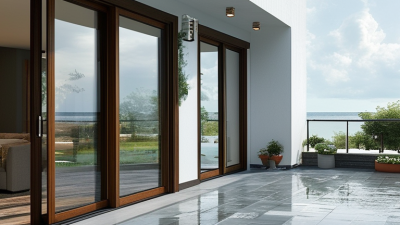
In 2026, lift-and-slide doors remain popular for large openings and uninterrupted views. Their reinforced rollers support heavier insulated glass panels. Thermally broken aluminum frames also reduce cold bridges around the doorway. This matters in homes facing sharp seasonal changes.

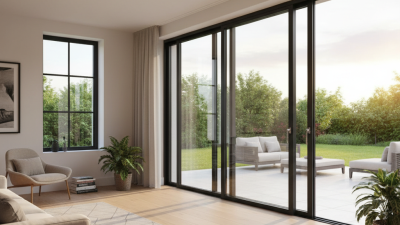
Slim-profile multi-track doors are gaining attention among architects and high-end residential buyers. They stack panels neatly beside the wall. Pocket sliding doors go further by hiding panels inside the structure. They create a clean opening, but installation requires accurate structural planning. A small alignment error can cause rubbing, noise, or poor sealing.

Smart sliding doors are also developing quickly. Sensors can detect obstacles, while connected locks improve access management. However, automation should not replace manual safety checks. Reliable systems need emergency release options, stable power protection, and tested child-safety settings. Glass remains another important choice. Low-emissivity insulated glass helps control indoor temperature and glare. Laminated glass can improve impact resistance and sound reduction.

From site evaluations, drainage and track maintenance often matter more than appearance. Dust collects easily in lower channels. Coastal air can accelerate hardware corrosion. Buyers should request verified air, water, wind, thermal, and cycle-test data.

No door type performs perfectly everywhere. I have seen beautiful systems fail because the wall opening was poorly prepared. That detail deserves more attention.

Materials, Energy Efficiency, and Smart Door Technologies

For 2026, global buyers are examining sliding doors beyond appearance. Material selection now affects durability, insulation, maintenance, and carbon impact. Thermally broken aluminium offers slim frames and strong resistance to coastal moisture. Timber provides warmth, but it needs disciplined sealing and maintenance. uPVC can deliver practical insulation at a lower cost, although frame stability varies across climates. Recycled content sounds persuasive, yet buyers should request verified environmental documentation.

Energy performance deserves closer attention. The International Energy Agency reports that buildings consume about 30% of global final energy. Low-emissivity double glazing can reduce heating and cooling losses significantly. The U.S. Department of Energy estimates that efficient window replacements may save 20–30% on household heating and cooling costs. Sliding doors still create larger air-sealing challenges than fixed windows. Check whole-unit U-values, solar heat-gain coefficients, drainage design, and installation tolerances. A premium panel performs poorly when the threshold is fitted unevenly.

Smart door technology is moving toward sensors, motorized opening, obstacle detection, and app-based access. The Connectivity Standards Alliance’s Matter standard may improve interoperability across compatible home systems. However, wireless controls can fail during outages or unstable networks. Manual override remains essential. Outdoor sensors also need protection from dust, rain, and accidental impact. Buyers should test noise levels, emergency release, battery backup, and software support before purchase. The most advanced door is not always the most reliable one. Sometimes, simpler hardware wins.

Safety Standards, Installation Needs, and Maintenance Factors

For 2026, global buyers should judge sliding doors by safety, installation quality, and serviceability, not appearance alone. The strongest options use tempered or laminated safety glass, tested against EN 12600 or ANSI Z97.1 requirements. These standards address impact behavior and glass breakage. Anti-lift blocks, secure locks, finger-safe gaps, and controlled closing also deserve close inspection. A practical warning: certification may differ between markets, so buyers should verify local building codes before ordering.

Installation errors often create more problems than the door itself. The opening must be square, level, and adequately supported. Installers should check threshold drainage, wall movement, wind exposure, and the finished floor height. Low thresholds look convenient, but they can increase water-entry risks without proper drainage. The UNEP 2024 Global Status Report for Buildings and Construction reports that buildings consume about 32% of global energy and produce approximately 34% of global carbon emissions. Therefore, perimeter seals and correct glazing selection matter beyond comfort. The detail matters.

Maintenance should be practical for the local climate. Tracks need frequent vacuuming, followed by a damp-cloth clean. Rollers should be inspected when movement becomes noisy, uneven, or unusually heavy. Coastal properties need corrosion-resistant hardware and more frequent rinsing. The U.S. Department of Energy states that windows can account for 25% to 30% of residential heating and cooling energy use. Better sealing can reduce losses, although real performance depends heavily on installation. I would not treat a high energy rating as proof of perfect workmanship. Periodic adjustment remains necessary.

What Are the 2026 Top Sliding Doors for Global Buyers? - Safety Standards, Installation Needs, and Maintenance Factors

Door Type Best-Fit Application Safety Requirements to Verify Typical Installation Needs Energy and Weather Factors Maintenance Factors Global Buyer Assessment
Thermally Broken Aluminum Lift-and-Slide Large openings, modern homes, high-use exterior connections Use safety glazing where required; verify impact classification for severe-weather zones, anti-lift protection, finger-safe clearances, and tested locking hardware Structural header support, accurately level sill, drainage path, perimeter air and water sealing, and professional glass handling Thermal breaks reduce frame heat transfer; insulated low-emissivity glazing and correctly sized weather seals improve performance; coastal areas require corrosion-resistant finishes and hardware Clean tracks, inspect rollers and seals, keep drainage channels clear, and lubricate only with a compatible product Strong premium choice
Insulated uPVC Sliding Door Residential replacements and moderate-size patio openings Safety glazing in hazardous locations, secure multi-point or equivalent locking, anti-lift blocks, and compliance with the applicable local product standard Rigid, square opening; sill support across the full frame; allowance for frame expansion; careful adjustment of rollers and locking points Generally low frame conductivity; select double or triple insulating glass according to climate, condensation risk, and local energy requirements Wash frames with mild detergent, remove debris from tracks and weep holes, and replace compressed gaskets when necessary Good value and insulation
Wood-Clad Sliding Door Cold or mixed climates where interior appearance and insulation are priorities Safety glazing, secure locking, anti-lift measures, and suitable wind or impact testing for the building location Protected installation zone, accurate moisture management, sill pan or equivalent drainage detail, and protection of unfinished wood surfaces Wood provides relatively low thermal conductivity; exterior cladding improves exposure resistance, but junctions must be sealed against bulk water Inspect coatings, joints, sealants, and signs of moisture; refinish exposed wood according to exposure and coating condition High comfort, higher upkeep
Composite or Fiberglass Sliding Door Variable climates and buyers seeking dimensional stability Safety glazing, anti-lift devices, positive locking, and independently tested air, water, structural, and forced-entry performance where applicable Stable subfloor, level sill, adequate shims under load points, and continuous flashing or drainage detailing Low expansion and good resistance to moisture; actual thermal performance depends on frame design, glazing, spacers, and installation quality Routine cleaning and track care; inspect perimeter seals and hardware without sanding or refinishing the frame Balanced all-weather option
Impact-Rated Sliding Door Hurricane- or windborne-debris-prone coastal regions Laminated impact glazing, tested pressure and debris resistance, approved anchorage, robust interlocks, and region-specific code approval Structural opening verification, engineered fastener spacing, compatible sill and flashing, and installation by personnel familiar with local wind requirements Laminated glass remains bonded after fracture; check solar-control needs, air leakage, water resistance, and coastal corrosion protection Inspect interlocks, rollers, seals, anchors, and laminated-glass edges after major storms; replace damaged components promptly Safety-first regional choice
Accessible Low-Threshold Sliding Door Universal-design homes, care facilities, and step-free entrances Verify threshold, clear opening, operating force, safety glazing, finger protection, and accessibility requirements applicable to the project jurisdiction Flush or carefully transitioned floor finish, accurate sill drainage, firm subfloor support, and clearance for handles and mobility equipment Low thresholds must still manage water; use tested sill drainage and weather seals rather than relying on a raised barrier alone Keep the threshold free of grit, confirm smooth operation, and check that roller adjustment does not create excessive operating force Best for inclusive access
Multi-Panel Folding-Sliding System Very wide openings and indoor-outdoor living areas Safety glazing, anti-pinch clearances, secure panel stacking, tested structural performance, and safe load limits for each panel Engineered header, highly level sill, greater structural tolerance control, accurate panel alignment, and adequate stacking space Performance varies widely with panel count and seals; specify tested air and water resistance rather than judging by frame appearance Clean multiple tracks and hinges, inspect guide pins and seals, and arrange periodic adjustment for high-use installations Maximum opening, complex setup
International specification checklist: Confirm the applicable local building code and product test evidence. Common references include safety-glazing requirements such as ANSI Z97.1, CPSC 16 CFR 1201, EN 12600, or AS/NZS 2208; accessibility provisions such as ADA Standards or ICC A117.1 where applicable; and regional air, water, structural, thermal, impact, and forced-entry requirements. Actual performance depends on the complete door assembly and installation, not the frame material alone.

How to Compare Suppliers, Costs, and Long-Term Value

For global buyers, the best 2026 sliding door is not always the cheapest model. Supplier comparison should begin with verified performance data, not showroom appearance. Ask for U-value, solar heat gain coefficient, air leakage, water resistance, and wind-load results. These figures should match the destination’s climate and building requirements. Look beyond the showroom.

The U.S. Department of Energy reports that windows can cause 25–30% of residential heating and cooling energy use. This makes glazing, seals, thermal breaks, and installation quality financially important. UNEP’s Global Status Report for Buildings and Construction 2024 reports that buildings consume about 32% of global energy. A poorly sealed door can quietly increase operating costs. Cheap is not cheap.

Compare total delivered cost, including packaging, freight, duties, installation, drainage preparation, and replacement hardware. Then review warranty limits, spare-part availability, service response times, and documented cycle testing. A supplier with transparent factory records is usually easier to trust. Regional certifications should be checked independently through recognized testing bodies, such as NFRC or equivalent local schemes. I still see buyers overvalue slim frames and overlook maintenance access. That shortcut can fail. A perfect spreadsheet is impossible, but a five-year cost estimate exposes weak quotations. Assess corrosion resistance near coasts, drainage performance during heavy rain, and roller replacement procedures before signing. Past installation references matter more than polished promises.