
CDX Plywood Structural panels are common on job sites, yet the label can be misleading. “CDX” describes veneer grades: one face is C-grade, the other D-grade, and the inner plies have their own grades. It does not, by itself, confirm a panel’s span rating or suitability for every structural use. Check the grade stamp. Look for panel thickness, rated span, and exposure classification before choosing a sheet.
A useful expert line, pending approval and attribution, is: “Read the panel stamp, not just the CDX label.” — [Verified Expert Name], structural-panel specialist. This distinction matters when plywood is used for roof sheathing, wall sheathing, or subfloors. A sheet exposed to rain during construction is not automatically waterproof. Exposure 1 panels are designed for limited weather exposure, not permanent outdoor use. Small details matter. Check the project plans and manufacturer guidance, and follow the required fastener spacing. A slightly bowed panel can also affect fit, seams, and the finished surface. CDX can be a practical choice when its rating matches the job. But the nickname alone is not enough. This guide explains what the label means, how structural ratings work, and where CDX plywood may fit. It also points out a common gap: buyers sometimes focus on price before checking the panel stamp. That shortcut can lead to the wrong sheet.
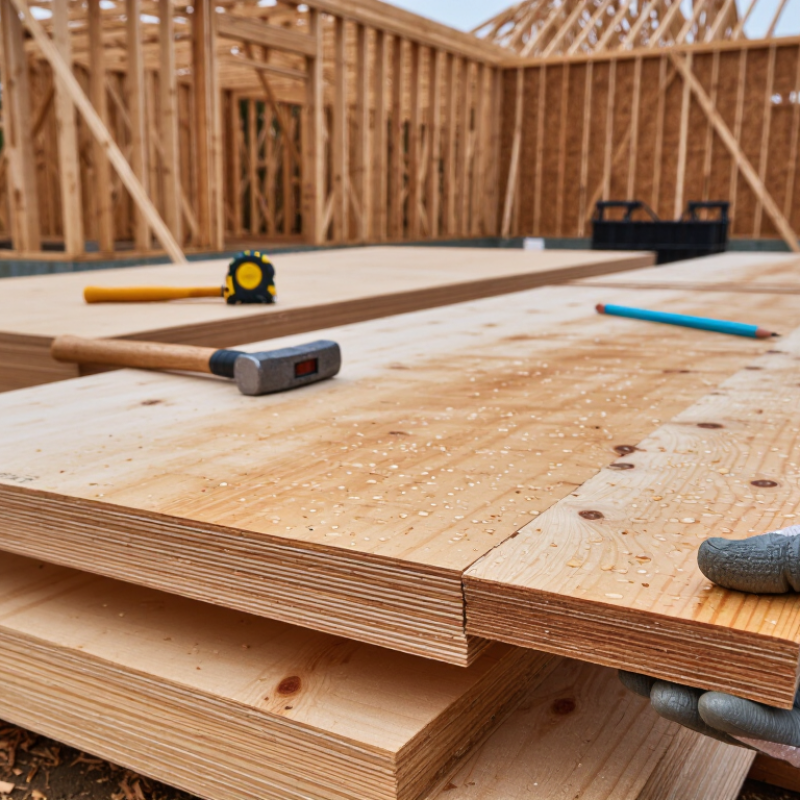
CDX describes face quality and bonding, not a complete structural strength rating. “C” and “D” refer to the veneer grades on the two faces; the “X” commonly indicates Exposure 1 adhesive. That bond tolerates limited construction exposure, but it does not make the panel suitable for permanent outdoor wetting. The U.S. Department of Commerce’s PS 1 standard covers structural plywood, while a panel’s grade stamp provides more useful design information. Look for its span rating, such as 32/16, which indicates tested support spacing limits for roof and floor sheathing. Check the stamp, not just the word CDX.
Plywood’s cross-laminated veneers help it resist movement across the panel. Still, moisture matters. The USDA Forest Products Laboratory’s Wood Handbook reports equilibrium moisture content near 6% at 70°F and 30% relative humidity, rising to about 13% at 70°F and 70% relative humidity. A damp jobsite can therefore change panel dimensions. Keep sheets flat, off the ground, and covered while allowing airflow. Small details count. Seal or protect exposed edges where the assembly requires it, and follow the project’s specified thickness, span rating, and fastening schedule. CDX is common for sheathing, but the label alone does not confirm suitability for every load or exposure.
CDX begins as logs peeled into thin veneers, which are dried, visually graded, and arranged with neighboring layers at right angles. This cross-lamination helps limit movement across the panel. The USDA Forest Products Laboratory’s Wood Handbook describes how plywood’s layered construction improves dimensional stability compared with solid wood. Adhesive is applied between veneers, then heat and pressure bond them into a panel. The panel is trimmed and stamped with its grade and performance information.
In the common CDX designation, C and D describe the face and back veneer grades; D permits more visible defects. The X refers to Exposure 1 adhesive bonding, intended to withstand temporary construction moisture, not long-term outdoor exposure.
That matters. U.S. Department of Commerce standards PS 1-19 and PS 2-18 set requirements for structural plywood and performance-rated panels.
A stamp may also show a span rating, such as 32/16, indicating permitted support spacing for roof and floor applications under specified conditions, as described in the APA Engineered Wood Construction Guide.
CDX is often used for roof sheathing, subfloors, and wall sheathing, but the panel thickness, span rating, and project specifications still need checking. The label alone is not a complete design instruction.
CDX structural plywood combines cross-laminated wood veneers with an exterior-rated adhesive. The C and D describe veneer grades: the C face is generally smoother, while the D face may contain more knots and repairs. The X refers to adhesive suited to limited moisture exposure, not waterproof performance. That distinction matters. CDX can tolerate temporary rain during construction, but prolonged wetting may cause swelling, edge damage, or mold. Its strength depends on the panel thickness, veneer quality, and structural grade stamp, not the letters alone.
The crossed veneer layers help resist bending and keep panels more stable than a single solid board. Still, the rough D face and occasional core gaps can affect fastening or finish quality. Builders commonly use CDX for roof and wall sheathing, and sometimes subfloors when the panel rating and installation suit the design. Check the grade stamp and span rating before choosing a panel. Leave appropriate expansion gaps, support panel edges where required, and protect exposed surfaces from standing water. A damp sheet may look fine at first, yet its edges can soften after repeated wetting. That detail is easy to overlook.
What Is CDX Plywood Structural Grade and How Is It Used?
Common Uses in Construction Projects
CDX plywood is used where a strong, practical panel will be covered by other materials. Its C and D face grades allow visible knots and repairs, while “X” refers to exposure-rated adhesive. That adhesive helps the panel tolerate limited construction moisture. It is not waterproof. Builders commonly install CDX as roof sheathing, wall sheathing, and subflooring. On a roof, panels support shingles or other roofing layers. On walls, they provide a base for cladding and help stiffen the framing. Floors need suitable thickness and support spacing to limit flex and squeaks.
The right panel depends on the job. A shed wall may need different thickness than a floor carrying frequent foot traffic. Check the panel’s span rating, thickness, and installation guidance before choosing it. Panels should be supported and fastened as specified, with gaps where recommended for expansion. Keep them dry during storage and cover exposed edges if rain is expected. A brief wetting may be manageable, but repeated or prolonged exposure can cause swelling and damage. Even experienced crews can underestimate how quickly water reaches an unprotected edge.
Tips: Store panels flat on blocks, raised above the ground. Inspect edges for swelling before installation. Follow the project plans and applicable building requirements, especially for roof and floor spans. If the panel grade or rating is unclear, verify it before work begins.
| Topic | What It Means | Common Construction Use | Key Consideration |
|---|---|---|---|
| CDX designation | “C” and “D” describe the face-veneer grades; “X” commonly indicates an exterior-type adhesive bond classification, often Exposure 1. | General-purpose structural sheathing when the panel’s grade stamp and specifications permit it. | CDX is a common trade description, not a complete specification. Check the panel stamp for its standard, bond classification, thickness, and span rating. |
| Roof sheathing | Panels are fastened to roof framing to provide a structural deck beneath roofing materials. | Roof decks on houses, garages, and other framed buildings. | Select panel thickness and span rating for the rafter or truss spacing, loads, and applicable building requirements. |
| Wall sheathing | Structural panels attached to wall framing; the wall assembly may use them to help resist lateral forces. | Exterior wall sheathing beneath a specified weather-resistive barrier and cladding system. | Follow the structural plans for panel layout, edge support, fastening, and bracing. CDX itself is not a weather barrier or finished siding. |
| Subfloor panels | A structural layer installed over floor joists to support the floor assembly. | Subflooring where the panel’s rating, thickness, edge support, and installation details meet the project requirements. | Use a suitable rated panel and install it as specified. CDX is generally not a smooth finish floor or a substitute for a required underlayment. |
| Exposure to moisture | Exposure 1 panels are designed to withstand limited moisture exposure during construction, not continuous weather exposure. | Temporary exposure while a building is being enclosed, when allowed by the panel specifications. | Protect panels from prolonged wetting and promptly dry or replace panels that are damaged. Exposure 1 does not mean the panel is suitable for permanent outdoor exposure. |
| Structural selection | Structural performance depends on the panel’s rated properties and how it is supported and fastened. | Roof, wall, and floor assemblies designed to meet project loads and local code requirements. | Do not select a panel by the CDX label alone; confirm the grade stamp, span rating, design documents, and applicable code requirements. |
CDX plywood is a sheathing panel with C- and D-grade faces. The “X” refers to an exposure-rated adhesive bond, not a waterproof surface. Its structural suitability depends on panel thickness, span rating, and the building plans—not the CDX label alone. It is commonly used for roof, wall, and floor sheathing when the specified rating matches the framing spacing. Keep panels dry and covered; prolonged weather exposure can cause swelling and damage.
Choose panels with legible grade and span stamps, and check for delamination, soft spots, or damaged edges before installation. Support panel edges as required by the design, and follow the project’s fastening schedule. Leave the recommended expansion gap between panels; many installers use about 1/8 inch, but panel instructions and plans take priority. On a busy job, rushing this detail is easy—and regrettable when edges buckle.
Tips: Acclimate panels near the work area, keep them flat on level supports, and lift them with help when needed. Wear eye protection and a suitable dust mask when cutting. Use a stable work surface, keep hands clear of the blade, and seal or cover installed sheathing promptly with the specified weather barrier.