China Top PU Foam Sealant Supplier How to Choose?
Choosing China’s top PU foam sealant supplier requires more than comparing online prices. A polished website can hide weak production controls, inconsistent raw materials, or limited technical support. Buyers should examine manufacturing experience, product range, and application knowledge. Window installation, door sealing, insulation, and general construction require different foam performance. Start with the use case. Then define measurable requirements.
A reliable supplier should provide a current technical data sheet, safety data sheet, batch information, and clear storage instructions. Check density, expansion rate, curing time, adhesion, dimensional stability, temperature resistance, and expected yield. Request samples from recent production batches, not only showroom stock. Test them on actual substrates, including concrete, aluminum, PVC, or wood. Observe nozzle flow, cell structure, tack-free time, and trimming quality. Small details matter. Ask about valves, propellant consistency, packaging protection, and private-label controls. Factory audits, video inspections, and independent laboratory reports can strengthen confidence. Certifications may support credibility, but they must match the destination market and product claims. Documents alone are not proof.
Supplier evaluation should also include communication speed, complaint handling, lead times, minimum order quantities, and shipment planning. A dependable partner explains limitations instead of promising everything. That matters. In practice, even strong suppliers may show batch variation, delayed replies, or unclear after-sales responsibility. These weaknesses deserve attention, not polite excuses. Compare test results, production records, and commercial terms together. The best choice is not always the cheapest factory. It is the supplier that repeatedly delivers suitable PU foam sealant, consistent documentation, and practical support. Reliable sourcing takes verification. It also requires honest reassessment.
What Is PU Foam Sealant and Where Is It Used?
China Top PU Foam Sealant Supplier How to Choose?
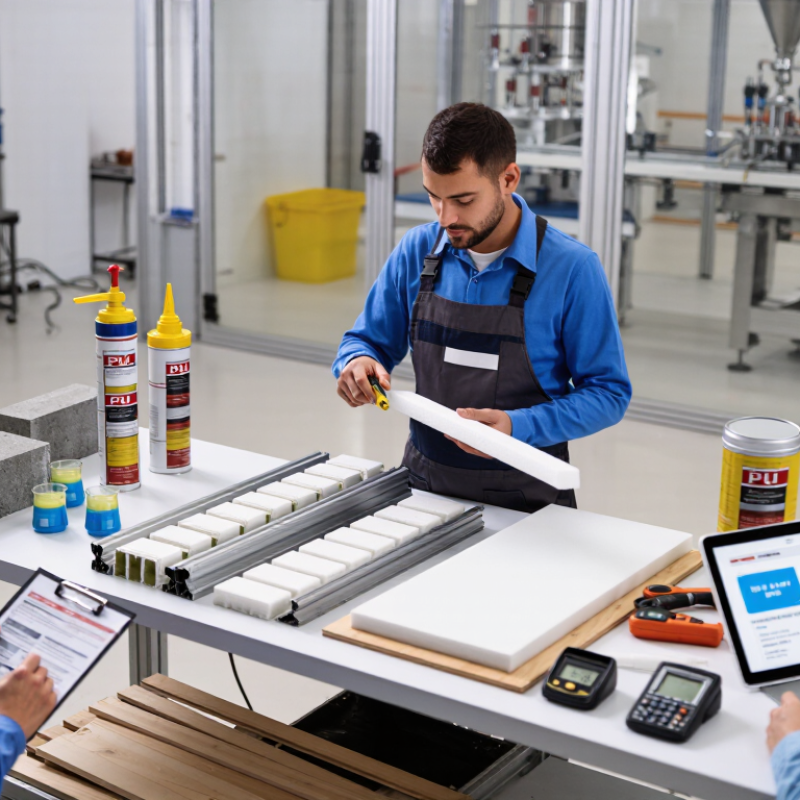
PU foam sealant is a moisture-curing polyurethane material. It expands after application, then forms a lightweight, flexible barrier. Most one-component foams use moisture from the air or substrate to cure. The cured foam helps reduce air movement, dust entry, and heat transfer around gaps. It is commonly used around window frames, door jambs, pipe penetrations, roof joints, and wall cavities. It is not a structural adhesive. That distinction matters.
Building performance gives this product practical importance. The 2023 Global Status Report for Buildings and Construction reported that buildings consumed about 30% of global final energy. The U.S. Department of Energy also identifies air sealing as a key method for reducing building energy waste. A narrow gap beside a window can feel insignificant. Repeated across a building, it becomes measurable. Field installers often check moisture, temperature, nozzle control, and surface cleanliness before filling joints. Too much foam can distort frames. Too little leaves hidden air paths.
Supplier selection should include technical data, not only price. Check expansion ratio, curing time, density, adhesion, temperature range, and dimensional stability. Safety Data Sheets and test reports should be available. Standards such as ASTM C1642 or EN 17333 may help compare application performance. Results still depend on workmanship. I have seen good foam fail on dusty, wet surfaces. That was not the product’s only problem. It was an installation mistake worth remembering.
Which Standards Should a China PU Foam Sealant Supplier Meet?
A reliable China PU foam sealant supplier should meet recognized quality, safety, and performance standards. ISO 9001 certification shows controlled processes, but it does not guarantee excellent foam. Ask for recent batch records, production dates, and third-party test reports. EN 17333 is useful for evaluating one-component PU foam performance, including expansion and application behavior. For building projects, relevant fire, insulation, and VOC requirements must also match the destination market.
Professional market reports indicate continued construction demand. Grand View Research reported that the global construction chemicals market exceeded USD 60 billion in 2023. This growth increases supplier choices, but also raises quality risks. A dependable factory should provide technical data for density, curing time, yield, adhesion, dimensional stability, and low-temperature performance. Check whether tests follow suitable methods, such as ASTM, EN, or applicable Chinese GB standards. A certificate without traceable testing is weak evidence.
Tips: Request samples from three production batches. Test them on concrete, aluminum, and PVC. Check nozzle blockage, foam shrinkage, and surface curing. Ask for SDS documents and clear storage conditions. I would not judge quality from appearance alone. A smooth foam surface can still hide poor adhesion. Supplier audits should include raw-material storage, filling equipment, worker training, and complaint records. Some factories may show excellent samples, yet struggle with consistency during humid seasons. That detail deserves attention.
What Manufacturing and Customization Services Are Available?
Choosing a reliable China PU foam sealant supplier requires more than comparing prices. Examine the manufacturing process, raw material control, and curing consistency. A professional factory should explain its polyol and isocyanate systems clearly. It should also provide batch records, safety data sheets, and practical test reports. Ask how workers control temperature, mixing ratios, foam density, and expansion during production. These details often reveal real experience.
Customization may include foam density, curing speed, color, nozzle design, valve type, can size, and packaging artwork. Some suppliers can develop formulas for window installation, insulation, fire-rated construction, or low-temperature application. Request samples under your actual conditions. Test adhesion on concrete, aluminum, wood, and other target surfaces. Check skin time, cutting time, expansion, shrinkage, and storage stability. A sample may perform well once, but repeated batches matter more. No supplier is perfect. Even strong factories may need several trials before matching a demanding formula.
Tips: Ask for a written customization schedule, minimum order quantity, sample approval process, and corrective-action plan. Confirm whether quality checks cover every batch or only selected cartons. Independent laboratory testing adds confidence when performance or regional compliance is critical. A low price can look attractive, but unstable foam can create costly rework later. Be willing to question unclear answers. That hesitation is useful.
China Top PU Foam Sealant Supplier: Manufacturing and Customization Services
Indicative business-day planning ranges for common PU foam sealant customization services. Actual lead times depend on formulation complexity, testing requirements, packaging approval, and order quantity.
When selecting a supplier, compare technical support, formulation capability, packaging development, quality control, compliance documents, and sample-to-production efficiency.
How to Verify Supplier Experience, Pricing, and After-Sales Support
When choosing a China PU foam sealant supplier, verify experience beyond a polished website. Ask for factory photos, production records, technical datasheets, and recent export references. A reliable supplier should explain density, curing time, expansion ratio, temperature range, and shelf life clearly. Request samples from the same production line, not showroom stock. Test adhesion on concrete, aluminum, wood, and painted surfaces. Small differences can affect installation quality.
Pricing needs careful comparison. Check the quotation line by line, including valves, packaging, testing, tooling, shipping terms, and replacement policies. A cheaper can may contain less usable foam.
The U.S. Department of Energy states that air sealing can reduce heating and cooling costs by up to 20% in suitable buildings. This makes consistent performance more valuable than a low unit price.
Industry research from Grand View Research also identifies construction sealants as a growing market, driven by building efficiency and renovation demand. Yet market growth does not prove every supplier is experienced.
Tips: Ask for a batch number, inspection report, and written warranty. Confirm response times for leakage, poor expansion, or damaged cartons. Speak with a technical contact before ordering. If answers remain vague, pause. I have seen buyers focus too heavily on price and overlook storage guidance. That mistake can create blocked valves, even when the formula itself is acceptable. After-sales support should include application advice, complaint handling, and replacement procedures, all recorded in writing.