
What Are the Top 10 Garden Lighting Types for Global Buyers?
Choosing Garden Lighting for international projects is rarely about brightness alone. It involves climate, architecture, maintenance, safety, and local expectations. A coastal resort may need corrosion-resistant fixtures, while a compact urban terrace may need low-glare wall lights. These differences make a universal recommendation difficult.
Janet Lennox Moyer, a respected landscape lighting designer and author, calls lighting “the jewelry of the landscape.” Her observation explains why fixture selection matters. The right light can reveal a stone path, highlight textured planting, or make a quiet seating area feel welcoming. The wrong one can create harsh shadows, visible glare, and unnecessary energy use.
This guide examines ten practical Garden Lighting types for global buyers. It considers path lights, spotlights, in-ground fixtures, wall lights, string lights, bollards, step lights, floodlights, smart systems, and solar options. Each type offers useful advantages, but each has limits.
Performance varies.
Buyers should check IP ratings, operating voltage, material quality, beam angles, color temperature, and replacement access. Local electrical requirements also deserve careful review. A beautiful fixture is not automatically a reliable one. Solar products may perform well in sunny regions, yet disappoint during long rainy seasons. Smart controls can improve convenience, but connectivity may become a weak point.
Some recommendations will remain debatable. That is intentional. Garden Lighting decisions depend on property size, budget, weather, planting design, and personal taste. The most expensive system is not always the most suitable. A thoughtful balance usually creates the safer, calmer, and more durable result.
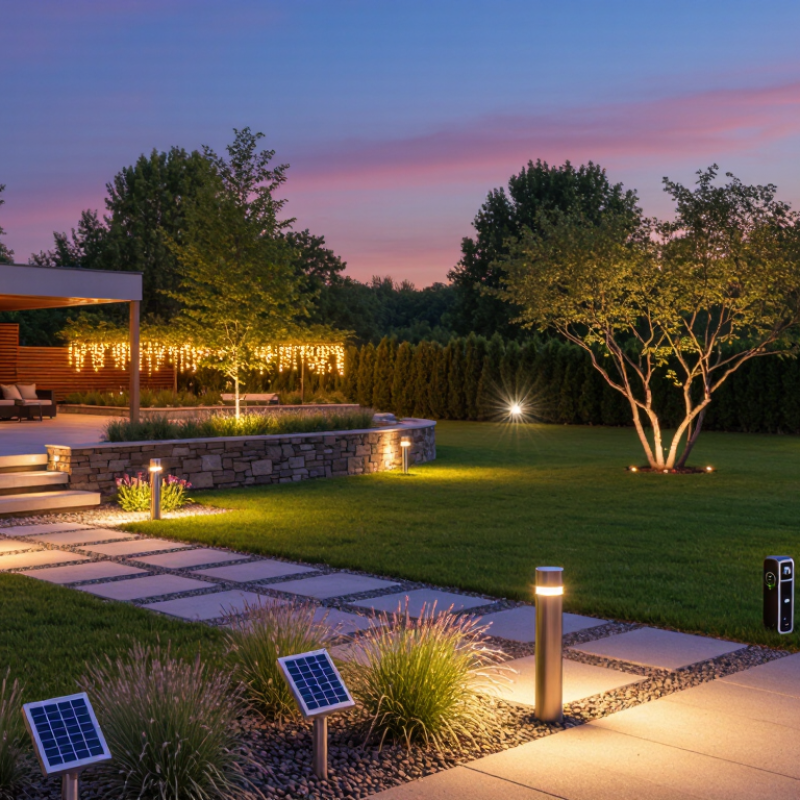
Table of Contents [Hide]
Garden Lighting Taxonomy: The Top 10 Types by Function and Placement
Garden lighting works best when each fixture has a clear job and a suitable position. A practical taxonomy helps global buyers compare performance, installation needs, and climate resistance. Path lights guide feet along walkways, while step lights reduce shadows on stairs and level changes. Bollard lights mark borders with stronger visual structure. Post lights brighten entrances, gates, and larger planting zones. Wall lights add security and useful illumination beside doors, patios, and service areas.
Spotlights create focused beams for trees, sculptures, or architectural details. Floodlights spread wider coverage across lawns, driveways, and open courtyards. Uplights sit at ground level and send light into trunks or foliage, shaping the garden after dark. String lights provide decorative warmth across pergolas, balconies, and seating areas. Deck or recessed lights fit into timber, stone, or paving, making edges easier to read.
Placement should follow the task, not fashion. Check ingress protection ratings, corrosion resistance, cable quality, heat management, and local electrical requirements. Solar models suit sunny borders, but winter performance can disappoint. Low-voltage systems often simplify installation, though transformers still need dry, accessible locations. Use warm light near seating and softer output around plants. I have found that excessive brightness flattens texture and disturbs neighbors. This is easy to overlook. Test beam angles at night, because catalogue images rarely show glare, shadows, or wet-surface reflections.
What Are the Top 10 Garden Lighting Types for Global Buyers?
| No. | Lighting Type | Primary Function | Typical Placement | Typical Light Output | Common CCT | Typical Power | Recommended Ingress Protection | Main Advantages | Key Buyer Consideration |
|---|---|---|---|---|---|---|---|---|---|
| 1 | Pathway Lights | Wayfinding and low-level safety illumination | Walkways, driveways, borders, and steps | 50–200 lm per fixture | 2,700–3,000 K | 1–8 W LED | IP44 minimum; IP65 for exposed locations | Creates visual guidance with comfortable, low-glare light | Check spacing, beam distribution, glare control, and anchoring in the soil |
| 2 | Spotlights | Accent lighting and focal-point highlighting | Trees, sculptures, façades, planters, and architectural details | 200–1,000 lm per fixture | 2,700–4,000 K | 3–20 W LED | IP65–IP67 | Precise beam control and strong visual emphasis | Select beam angle, aiming adjustment, glare shielding, and heat management |
| 3 | In-Ground Well Lights | Concealed uplighting and architectural enhancement | Ground surfaces, paving, lawns, and beneath trees | 300–1,500 lm per fixture | 2,700–3,000 K | 5–25 W LED | IP67–IP68 | Minimal visual clutter and high-impact upward illumination | Confirm load rating, drainage, flush installation, and resistance to standing water |
| 4 | Wall and Fence Lights | Perimeter, entrance, and façade illumination | Garden walls, fences, gates, garages, and exterior walls | 300–1,200 lm per fixture | 2,700–4,000 K | 4–18 W LED | IP44 minimum; IP65 for weather-exposed areas | Combines property visibility, safety, and decorative design | Verify mounting surface, cable entry, corrosion resistance, and light spill |
| 5 | Deck and Step Lights | Task lighting and trip-hazard reduction | Deck boards, stair risers, railings, patios, and terraces | 20–150 lm per fixture | 2,700–3,000 K | 0.5–5 W LED | IP65–IP67 | Compact, discreet, and effective for level changes | Check surface temperature, load resistance, drill dimensions, and cable protection |
| 6 | String and Festoon Lights | Ambient, festive, and social-area lighting | Pergolas, trees, balconies, fences, and outdoor dining areas | 10–40 lm per LED lamp | 2,200–3,000 K | 0.5–2 W per lamp | IP44 minimum; IP65 for permanent outdoor use | Creates a warm atmosphere and is simple to arrange | Review cable length, lamp spacing, suspension support, timer options, and outdoor connectors |
| 7 | Floodlights | Broad-area security and functional illumination | Large lawns, driveways, patios, service areas, and entrances | 1,000–5,000 lm per fixture | 3,000–5,000 K | 15–60 W LED | IP65–IP66 | Covers large areas with relatively few fixtures | Control glare, avoid light trespass, and size output for the mounting height |
| 8 | Solar Garden Lights | Wire-free decorative and pathway illumination | Flower beds, pathways, lawns, patios, and remote garden zones | 10–200 lm per fixture | 2,700–4,000 K | 0.1–2 W LED; solar charging | IP44–IP65 | Easy installation without trenching or mains wiring | Assess solar exposure, battery capacity, seasonal runtime, and cloudy-weather performance |
| 9 | Underwater and Pond Lights | Water-feature enhancement and aquatic accents | Ponds, fountains, waterfalls, pools, and garden streams | 100–1,000 lm per fixture | 2,700–5,000 K or RGB | 2–20 W LED | IP68 for permanent submersion | Adds depth, movement, and visual interest to water features | Confirm submersion depth, low-voltage safety, cable sealing, and local water-feature regulations |
| 10 | Smart and Sensor-Activated Lights | Automated control, security, and energy management | Entrances, pathways, driveways, patios, and perimeter zones | 100–2,000 lm per fixture | 2,700–4,000 K; tunable options available | 2–30 W LED | IP44 minimum; IP65 for exposed fixtures | Supports timers, motion detection, dimming, and remote control | Check network range, sensor detection area, control compatibility, privacy, and software support |