What Are the Best Types of Door Hardware in 2026?

Choosing the best door hardware in 2026 requires more than comparing finishes or counting smart features. A reliable choice must match the door, building use, climate, security needs, and daily traffic. In a busy family entrance, a solid lever handle may offer faster, easier operation than a decorative knob. A commercial door may need durable hinges, a controlled closer, and hardware tested for repeated use. Small details matter. Loose screws, sharp edges, or a weak latch can quickly turn a stylish installation into a maintenance problem.

Smart locks remain important, but convenience should not replace dependable mechanical performance. Battery life, emergency access, privacy settings, and installation quality deserve careful attention. Look for clear manufacturer specifications, recognized testing information, corrosion resistance, and warranties that explain real coverage. Accessibility also matters, especially where children, older adults, or people with limited hand strength use the door. A matte black finish may look modern, yet it can reveal fingerprints and wear sooner than expected. Nothing is perfect.

This guide compares popular door hardware types for homes, offices, apartments, and renovation projects. It considers durability, ease of use, security, appearance, maintenance, and long-term value. Some recommendations will depend on the door material and local building requirements. That uncertainty is worth acknowledging. The most expensive hardware is not automatically the best, and the newest product may still have weaknesses. Practical evidence, careful installation, and honest product comparisons create a more trustworthy decision.

What Are the Best Types of Door Hardware in 2026?

Defining “Best” Door Hardware by ANSI/BHMA Grades 1–3 in 2026

What Are the Best Types of Door Hardware in 2026?

“Best” door hardware depends on performance, location, and daily use. ANSI/BHMA Grades 1–3 provide a practical benchmark for many locksets and latching products. Grade 1 represents the highest commercial performance level. It suits schools, hospitals, offices, and busy public entrances. Grade 2 offers dependable service for moderate commercial traffic and stronger residential applications. Grade 3 generally fits light residential use.

The grade is not the whole decision. It depends. A Grade 1 lock can still perform poorly if the door sags or the strike is misaligned. In field inspections, I often find loose screws, shallow strike pockets, and frames that are slightly twisted. These small defects create failed latching, scraping, and unnecessary wear. Correct installation matters as much as the label.

Look at traffic patterns before choosing hardware. A main entrance with hundreds of daily openings needs durable springs, secure fasteners, and smooth latch action. A quiet interior door may need less hardware, but it still requires reliable alignment. Grade classifications can vary by product type and applicable ANSI/BHMA standard, so verify the manufacturer’s test documentation. Higher grade hardware usually costs more, yet replacement labor can cost more than the original upgrade. My own recommendation has changed over time: choose the grade that matches real use, not the highest number automatically.

Comparing Mechanical, Electronic, and Smart Locks by Security Standards

What Are the Best Types of Door Hardware in 2026?

Choosing door hardware now requires more than comparing metal finishes. Mechanical locks remain dependable because they operate without batteries, networks, or software updates. For commercial openings, ANSI/BHMA grades help measure durability and security. Grade 1 hardware usually suits heavy traffic, while Grade 2 fits many lighter commercial applications. Cylinders should also resist picking, drilling, and unauthorized key duplication. Simple hardware can be surprisingly strong.

Electronic Locks

Electronic locks add controlled credentials, audit trails, and rapid access changes. Their quality depends on more than the keypad or card reader. Check tested performance under standards such as UL 294, and confirm whether the design is fail-safe or fail-secure. Fire exits, emergency release rules, and backup power require careful coordination. In my experience, weak battery planning causes more trouble than weak hardware. That is easy to underestimate.

Smart Locks

Smart locks offer remote management, temporary permissions, activity alerts, and integration with building systems. However, a connected lock needs encrypted communication, secure authentication, signed firmware, and prompt vulnerability handling. Look for documented cybersecurity practices, not just “smart” marketing. Network outages should not trap occupants or erase essential access records. Some systems also expose privacy concerns through detailed entry histories. I would review those policies before installation. Standards vary by region, and no single certification proves complete security. Physical testing, installation quality, software maintenance, and staff procedures must be assessed together.

Choosing ADA-Compliant Hardware: 5-Pound Opening Force and 34–48-Inch Reach

Best door hardware in 2026 should make access easier, not merely satisfy a checklist. Lever handles are usually more practical than round knobs because they need less grip strength. Push plates and pull handles can also support users with limited hand mobility. During site checks, small details matter, such as a stiff latch or a handle hidden behind a deep frame.

The U.S. Access Board’s ADA Standards limit opening force to 5 pounds for many interior hinged, sliding, and folding doors. Fire-door requirements may differ, so the door schedule needs careful review. Operable hardware should generally sit between 34 and 48 inches above the finished floor. This reach range helps wheelchair users, shorter adults, and people with limited shoulder movement. Keep the approach clear. A door may meet the measurement but still feel unusable beside a wall or cabinet.

The 2023 American Community Survey reported disabilities among 13.4% of the U.S. civilian noninstitutionalized population. The CDC’s Disability and Health Data System also reports that about one in four U.S. adults has a disability. These figures make accessible hardware a mainstream design need. A practical specification should include a force test, reach measurement, and latch inspection after installation. A perfect specification is rare. Construction tolerances, weather, and door weight can change performance. Rechecking the installed door is the part many projects miss.

Evaluating Smart Access Systems with UL 294 and Mobile Credential Support

What Are the Best Types of Door Hardware in 2026?

Smart access hardware is becoming more practical, but convenience should not replace verified security. Systems evaluated against UL 294 can provide a stronger basis for reviewing access control units, readers, controllers, and communication paths. The standard helps assess construction, electrical safety, performance, and resistance to unauthorized access. Certification still requires careful checking. A label alone does not explain how the system performs in a busy building.

Mobile credential support adds daily flexibility. Staff can use encrypted credentials through approved smartphones instead of carrying plastic cards. Administrators should test enrollment, immediate revocation, device replacement, and offline operation. A reader should respond quickly, even when a user stands outside in rain with cold hands. Bluetooth and near-field communication may serve different entry habits. The best setup supports both when the building’s risk profile justifies it.

Reliable installations also depend on ordinary hardware. A strong door closer, protected cabling, emergency release, and backup power remain important. Access logs should record user identity, time, door location, and unusual attempts. Keep data limited. Keep permissions current. In my experience, poorly planned user roles create more weakness than the reader itself. One unresolved concern is mobile-device dependency: a dead battery or lost phone can delay legitimate entry. Temporary credentials, staffed fallback procedures, and regular access reviews should be tested before deployment, not after failure.

Matching Hardware Types to Residential, Commercial, and Hospitality Needs

What Are the Best Types of Door Hardware in 2026?

Matching Hardware Types to Residential, Commercial, and Hospitality Needs

Choosing door hardware in 2026 starts with the building, not a trend. In residential projects, lever handles suit daily movement and users with limited grip strength. Privacy locks work well for bedrooms and bathrooms. Entry doors need durable cylinders, weather-resistant finishes, and clear emergency operation. Smart access can help families manage guests, but batteries still fail. Keep a mechanical fallback. A small detail matters: the lever should clear nearby walls and furniture. I have seen attractive hardware become irritating when the swing path was ignored.

Commercial buildings demand stronger coordination. Heavy-use offices often need closers, exit devices where required, and access control for authorized entry. Ratings should match traffic, door weight, and maintenance capacity. Fire doors need compatible, approved hardware and careful installation. Local requirements must guide every decision. A low-cost closer may save money initially, yet it can slam doors, damage frames, and frustrate staff. That trade-off deserves honest review.

Hotels and serviced apartments need security without making guests feel processed. Electronic locks, room indicators, lever handles, and quiet closers should operate intuitively at midnight. Guestroom bathrooms need privacy functions, while connecting doors require controlled access and reliable latching. Coastal properties may need corrosion-resistant materials and frequent inspections. Housekeeping also needs practical override procedures. This is where teams sometimes overcomplicate things. Test sample doors with luggage, wet hands, and tired users before approval. Conditions expose assumptions quickly.

What Are the Best Types of Door Hardware in 2026? — Matching Hardware Types to Residential, Commercial, and Hospitality Needs
Hardware Type Primary Function Residential Applications Commercial Applications Hospitality Applications Security and Performance Accessibility and User Experience Maintenance Considerations Best Overall Fit
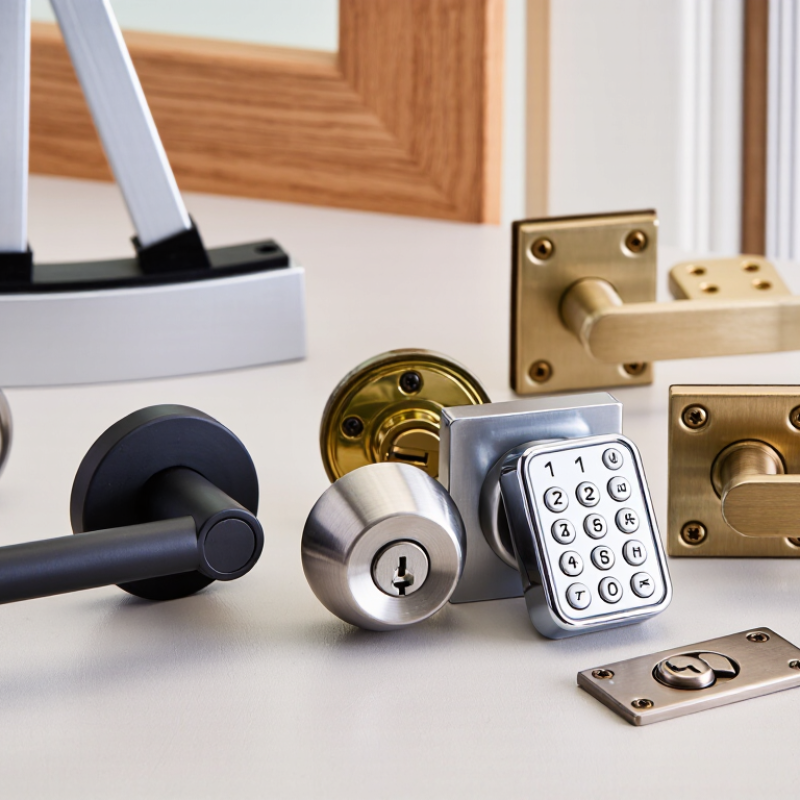
Cylindrical Lever Lockset Uses a tubular chassis with a lever handle, latch, and optional locking function. Bedrooms, bathrooms, entry doors, and interior passage doors. Private offices, classrooms, small retail areas, and low-to-medium traffic doors. Guest rooms, staff rooms, and service areas when compatible with the access-control plan. Available in privacy, keyed, classroom, and electronic configurations; commercial models can be tested to applicable cycle and strength standards. Levers are generally easier to operate than knobs and are suitable for users with limited hand strength when properly installed. Inspect latch alignment, tighten mounting screws, and lubricate only where recommended by the manufacturer. Most versatile general-purpose option
Knob Lockset Combines the door handle and locking mechanism in a rounded knob. Interior rooms, closets, and traditional-style residential doors. Low-traffic interior spaces where accessibility and heavy-duty performance are not primary concerns. Decorative low-traffic areas rather than main guest-room or public routes. Provides basic latching and locking, but the knob can be easier to defeat by twisting or gripping the hardware. Less suitable for people with reduced grip, arthritis, or limited dexterity than lever-operated hardware. Check for loose roses, worn springs, and latch friction; replace when operation becomes unreliable. Traditional residential interiors
Mortise Lockset Fits into a pocket cut into the door edge and combines latch, lock, and often deadbolt functions in one case. High-end entry doors, renovation projects, and homes requiring robust mechanical hardware. Busy offices, schools, healthcare areas, public buildings, and high-use corridors. Guest rooms, conference areas, public entrances, and doors requiring a durable integrated lock body. Strong construction and multiple functions support high-use applications; selection must match door thickness, frame preparation, and fire-rating requirements. Lever-operated versions can provide good usability; emergency egress must remain compliant with local regulations. Requires accurate installation and periodic inspection of the case, strike, latch, and trim. High-traffic and premium installations
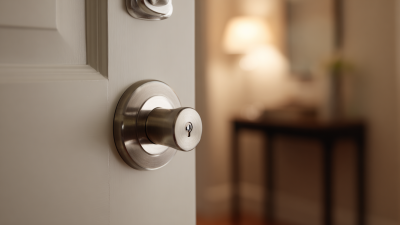
Deadbolt Provides supplemental security with a solid bolt that is not spring-retracted by normal pulling force. Exterior entry doors, side doors, and doors requiring additional resistance to forced entry. Storage rooms, perimeter doors, utility rooms, and selected back-of-house areas. Back-of-house rooms and restricted areas when coordinated with emergency-exit requirements. Single-cylinder designs operate with a key outside and thumbturn inside; double-cylinder designs require a key on both sides and may create egress concerns. Thumbturns are easier to use than interior keys, but all configurations must allow safe emergency exit where required. Keep the bolt and strike aligned; verify that the bolt extends fully without forcing the key or thumbturn. Supplementary exterior-door security
Electronic Access-Control Lock Controls entry using credentials such as a card, mobile credential, PIN, biometric factor, or wireless signal. Home offices, apartment buildings, shared entrances, and properties needing temporary or auditable access. Offices, campuses, healthcare facilities, warehouses, and multi-tenant buildings. Guest rooms, staff entrances, meeting rooms, and restricted service areas. Can support audit trails, scheduled permissions, rapid credential cancellation, and integration with centralized access management; depends on power, network, and cybersecurity controls. Reduces key handling and can support multiple credential methods; provide a reliable mechanical or electronic emergency override where required. Maintain batteries or power supplies, test fail-safe or fail-secure behavior, update software, and protect credentials from unauthorized use. Managed access and changing user permissions
Panic Exit Device Allows a latched exit door to open by pressing a horizontal touch bar or push pad from the egress side. Usually unnecessary for ordinary homes, but useful for large private facilities or shared residential buildings. Assembly spaces, schools, offices, retail stores, warehouses, and other occupied buildings with designated exit doors. Ballrooms, restaurants, conference facilities, theaters, and public exit routes. Designed to support rapid egress and may include fire-rated, alarmed, delayed-egress, or electrified versions subject to code approval. Push-bar operation is intuitive and generally supports one-motion exit operation when correctly specified. Test the touch pad, dogging or alarm functions, latch engagement, signage, and door closer at scheduled intervals. High-occupancy exit doors
Door Closer Controls the closing speed and final latching of a door after it is opened. Exterior doors, garage-to-home doors, fire-separation doors, and doors needing automatic closure. Entrances, corridors, stairwells, fire doors, and high-traffic interior openings. Guest-room corridors, stairwells, service corridors, and public-area doors. Adjustable closing and latch speeds help maintain security and fire-door performance; power size must match door weight, width, wind, and usage. Excessive closing force can make doors difficult to open, so adjustments must balance accessibility, latching, and code requirements. Inspect arm fasteners, leaks, mounting plates, sweep speed, latch speed, and door alignment. Controlled closing and fire-door support
Pull Handle with Separate Latch Provides a prominent grip while a separate lock, latch, or push plate controls opening. Contemporary entry doors, glass doors, pivot doors, and large-format residential doors. Retail entrances, offices, showrooms, public buildings, and doors with architectural finishes. Main lobbies, restaurants, boutiques, and feature entrances where appearance is important. Performance depends on the separate locking and latching system; through-bolted mounting is generally more secure than adhesive-only attachment. Large, easy-to-see handles can improve approach and grip, but opening force and door weight still need to be controlled. Check mounting fasteners, glass or door-panel stress, surface wear, and alignment of the separate latch. Design-led entrances and heavy doors
Hinges Supports the door and allows it to swing around its vertical axis. Interior and exterior doors, cabinets, gates, and specialty residential openings. Office doors, fire doors, institutional doors, and high-cycle openings. Guest rooms, public corridors, service doors, and back-of-house openings. Ball-bearing hinges are commonly selected for heavier or high-frequency doors; fire-rated assemblies require compatible listed components. Proper hinge alignment reduces opening force and prevents dragging or uneven gaps. Inspect screws, knuckles, pins, wear, corrosion, and door sag; replace damaged hinges rather than overtightening them. Reliable movement and long-term alignment
Door Stop or Floor Stop Limits door travel and protects walls, hardware, and adjacent surfaces from impact. Bedrooms, kitchens, hallways, and entry doors near walls or furniture. Offices, corridors, classrooms, healthcare areas, and service spaces. Guest rooms, corridors, public areas, and housekeeping routes. Helps prevent damage but should not obstruct required clear width, create a trip hazard, or interfere with door closers and fire doors. Low-profile wall or floor models are preferable where pedestrian traffic is heavy. Check anchors, rubber tips, floor condition, and whether the stop is transferring excessive force to the door. Protection of surrounding finishes
Selection should be confirmed against door type, traffic level, accessibility rules, fire and egress requirements, environmental exposure, and the applicable local building code.